Saving vs. Investing: Which Should You Do First?
You finally have some money left at the end of the month. Maybe it’s ₦20,000, maybe it’s ₦100,000, or maybe this is just the first time in a while you’ve had anything left over at all.
Quick note for international readers
The examples in this article use the Nigerian naira (₦), but the principles apply regardless of where you live. You can simply substitute your own currency.
Then comes the question: save it, or invest it?
Social media doesn’t help much here. Some people will tell you to invest immediately because “your money should be working for you.” Others insist you save everything you can before even thinking about investing. Neither camp is entirely wrong — it genuinely depends on your financial situation.
For most people, saving comes first. But that doesn’t mean waiting until you have millions of naira before you touch an investment. The better approach is figuring out what your money needs to do right now, versus what you want it to do later. Let’s break that down.
What Is Saving?
Saving is setting money aside for future use instead of spending it now: rent, school fees, a new phone, medical costs, a vacation, an emergency, a business expense, whatever’s coming.
The key thing about saving is accessibility. If you know you’ll need ₦500,000 for rent in three months, putting that money somewhere it could lose value before you need it doesn’t make much sense. Saving is about making sure the money is there when you need it—not about maximizing what it earns in the meantime.
What Is Investing?
Investing means putting money into assets such as stocks, bonds, Treasury bills, mutual funds, money market funds, and real estate, with the expectation that they’ll grow in value over time. Unlike ordinary saving, investing carries risk: the value can go up, but it can also go down, depending on what you’re invested in.
The reason people invest anyway comes down to one thing: inflation. If prices keep rising while your money sits still, that money buys less every year that passes. Saving preserves access to your money. Investing gives it a chance to actually grow.
Saving vs. Investing at a Glance
| Saving | Investing | |
| Main purpose | Preparing for future spending | Building wealth over time |
| Time frame | Short to medium term | Usually longer term |
| Risk | Generally lower | Varies from low to high |
| Access to money | Usually easier | Depends on the investment |
| Potential return | Generally lower | Potentially higher |
| Best suited for | Emergencies and short-term goals | Long-term financial goals |
Neither one is “better.” You need both; the real question is which one deserves priority right now.
The Order That Works for Most People
If you’re starting from scratch, a sensible sequence looks like this: get your basic finances under control, build an emergency fund, deal with expensive debt, then start investing for the long term. Treat it as a general guide rather than a strict rule — your income, expenses, job stability, and goals will all shape how it actually plays out for you.
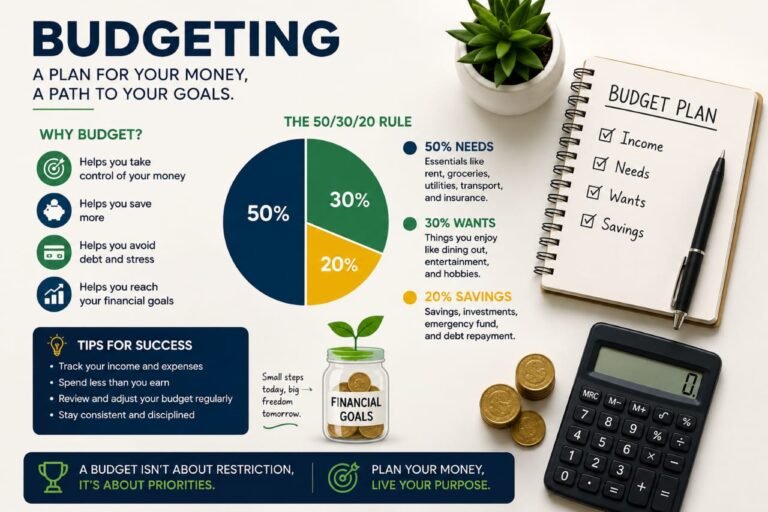
- Cover your essentials first: Food, housing, transport, and utilities come before investment returns. It doesn’t make much sense to chase a 15% return while struggling to cover rent. The first goal isn’t becoming an investor — it’s becoming financially stable enough to invest in the first place.
- Build an emergency fund: Life doesn’t follow your budget. Cars break down, laptops die, medical bills show up uninvited. Without a cushion for these moments, you end up either borrowing money or selling investments at exactly the wrong time. (If you haven’t already, our guide to building an emergency fund walks through how to size yours.)
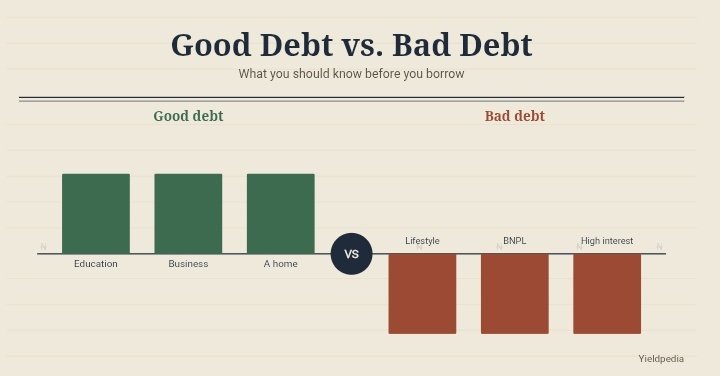
- Deal with expensive debt: This is the step a lot of new investors skip past. Say you’re investing your spare cash while also carrying a high-interest loan — your investment might earn 10% while that debt is quietly costing you 30%. You’re not required to clear every debt before investing a single naira, but expensive debt deserves serious attention first. There’s not much point growing one pile of money while another is draining just as fast.
- Then start investing for the long term: Once the foundation is in place, investing becomes a much more interesting question: What am I investing for? When will I need the money? How much risk can I actually stomach? This is where investing stops being “buy whatever someone online said would make you rich” and starts being an actual plan.
When Saving Should Take Priority
Saving matters most when a real expense is coming up soon. If you know you need ₦800,000 in four months, that money already has a job; it shouldn’t be sitting in something that could lose value just because you want a better return. Lean toward saving if you have little or no emergency fund, your income is unpredictable, a major expense is approaching, or you might need the money sooner than you’d like. The shorter your time horizon, the more access matters more than growth.
Can You Save and Invest at the Same Time?
Yes, and this is where the whole “saving vs. investing” framing gets a little misleading — it’s not really either-or.
Say someone earns ₦200,000 a month and has ₦40,000 left after essentials. Instead of forcing a choice between all-savings or all-investing, they can just split it based on where they actually are. If the emergency fund is still thin, most of that ₦40,000 goes there. Once it’s in decent shape, more of it can shift toward investments. There’s no universal split; your situation decides the ratio.
How Much Should You Save Before You Start Investing?
There’s no magic number. Someone with stable income and healthy savings is in a completely different position from someone whose income swings monthly with nothing set aside.
Instead of asking “how much do I need before I can invest,” ask this instead: if something unexpected happened tomorrow, would I have enough accessible money to handle it without selling investments or taking on expensive debt? If the answer is no, that cushion probably deserves priority before anything else. Your emergency fund target should come from your actual expenses and circumstances, not a round number someone posted online.
What Happens If You Invest Before You’ve Saved Enough
It’s not automatically a disaster, but it can create real problems. Say you invest ₦300,000, and two months later an unexpected ₦250,000 expense shows up right when your investment has dipped in value. Now you’re choosing between selling at a loss or scrambling to raise the money elsewhere. With a proper emergency fund, you might not have had to touch the investment at all, which is really the whole point of building one first.
The Opposite Mistake Is Just as Real
Some people take the “save first” advice too far and never actually get around to investing. They keep stacking cash indefinitely while inflation quietly eats away at what it’s worth. ₦1 million sitting in a savings account for five years is still ₦1 million on paper — but it buys noticeably less than it did when you first put it there. Saving protects your short-term position. At some point, though, long-term wealth building needs more than just a growing pile of cash.
Match the Money to the Timeline
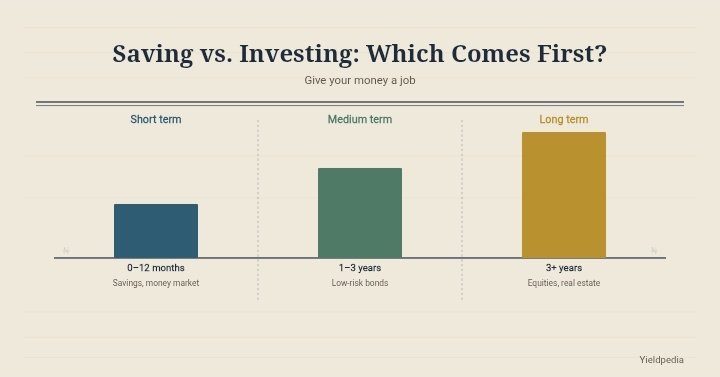
The simplest way to decide: how soon will you need it?
Money you’ll need soon: rent in a few months, upcoming school fees, a planned purchase — belongs in savings, where it’s accessible and not exposed to market swings.
Money you won’t touch for years: retirement, a child’s future education, long-term wealth building — is where investing starts to make more sense, with the specific investment and risk level depending on the goal.
A Few Mistakes Worth Avoiding
- Investing money you’ll need soon: Wanting a better return doesn’t change the fact that you need this cash in three months.
- Chasing unusually high returns: If a return looks too good, it’s either riskier than advertised or not what it claims to be. Understand what you’re buying before you buy it.
- Keeping everything in cash forever: Cash matters, but long-term wealth usually needs investments too.
- Investing because everyone else is: A friend’s win doesn’t mean the same investment fits your goals or risk tolerance.
- Treating the choice as permanent: Saving and investing aren’t rivals — they’re just tools for different jobs.
A Simple Way to Decide What to Do With Your Next Spare Cash
Ask yourself, in order: Do I have enough for my basic needs? Do I have an emergency fund? Do I have expensive debt to deal with? Will I need this money soon? If not, what’s it actually for? And do I understand where it’s going?
Work through those honestly, and the answer for where your next bit of spare cash should go usually becomes obvious.
So, Which Comes First?
For most people starting from scratch, saving comes first — but investing shouldn’t become an afterthought you keep postponing indefinitely. Build enough stability to handle life’s surprises, then use investing to work toward the goals that are further out.
Think of it like building a house: saving is the foundation, investing is what you build upward from it. You need both, and you don’t need to be rich to start either one. The real goal is just giving every naira a job — some for today, some for the unexpected, and some for the future. Knowing which is which is most of the battle.
Quick Summary
- . Saving and investing serve different purposes — one preserves access, the other pursues growth.
- Saving generally fits emergencies and short-term goals; investing fits longer-term growth.
- Build financial stability before taking on meaningful investment risk.
- An emergency fund keeps you from having to sell investments when life throws something unexpected at you.
- Expensive debt deserves attention before you invest aggressively.
- You can save and invest at the same time — it’s not either-or.
- Don’t sit on all cash forever if long-term wealth is the goal.
- Never invest in something you don’t actually understand.